Natural stone floor renovation is much more than a simple aesthetic refresh. It is a choice that is part of an eco-responsible approach, offering numerous environmental benefits compared to any other renovation solution—and even compared to the alternative of doing nothing...
I am often asked why we persist in renovating old natural stone. The answer isn't just aesthetic or heritage-based; today, more than ever, it is ecological.
At Emotion Pierres, we have analyzed the various options available to you, and the conclusion is clear. Here is why renovation wins on every front :
1. Renovation vs. Replacement: The Carbon Footprint
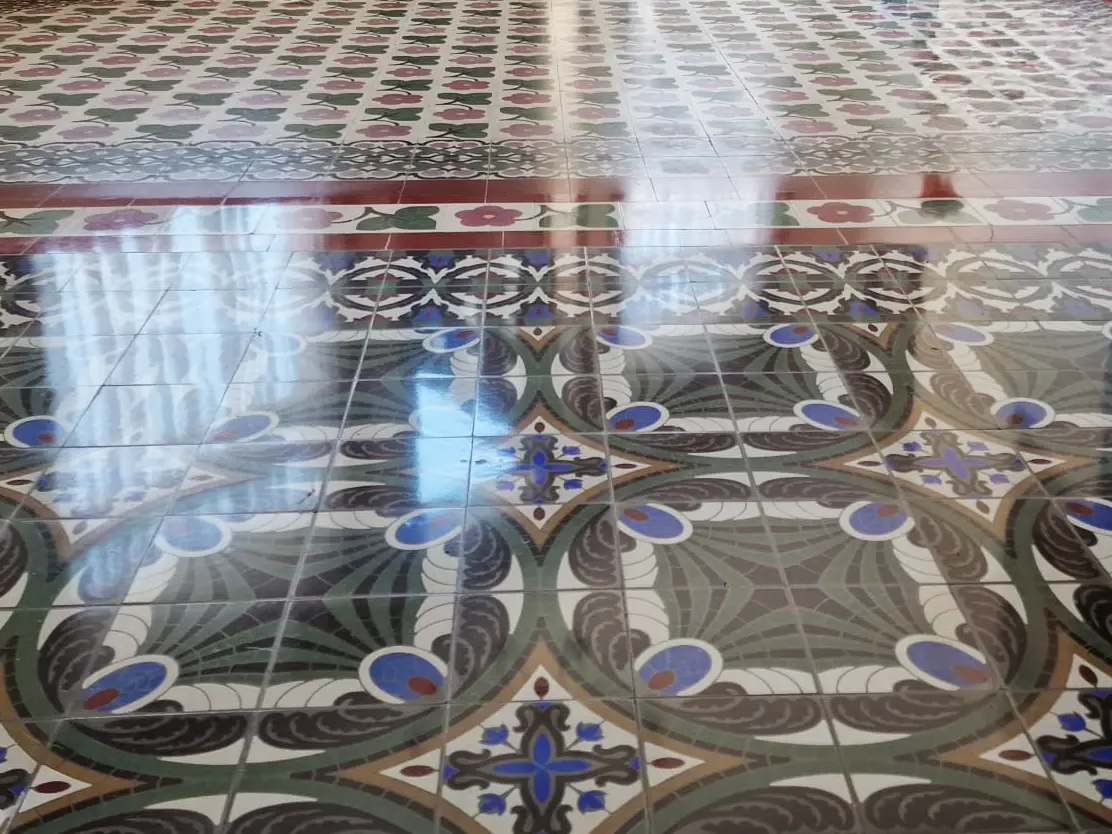
The "tabula rasa" option is an invisible ecological disaster. Tearing up a floor to install a new one combines the carbon footprint of demolition, rubble transport, a new cement screed (~20 kg CO2/m²), and the manufacturing of the new covering (~15 to 25 kg CO2/m² for porcelain tiles). It represents a colossal energy expenditure.
2. Renovation vs. Overlay: The "False Good Idea"
This is the middle-ground solution often considered for economic reasons: laying cheap laminate or vinyl over the stone.
Let’s be clear: even though we create beautiful poured floors (polished concrete, resin) with our sister company Zanutti, covering a noble stone with "entry-level" synthetic materials is an ecological nonsense. Laminate production generally accounts for 10-15 kg CO2/m², plus the underlayment (1 to 2 kg CO2/m²).
- Service Life : These floors will need to be replaced in 10 or 15 years. Renovated stone, on the other hand, is set for decades.
- La provenance : Many of these "budget" coverings are produced outside of Europe, with much less stringent environmental standards than our own and a disastrous transport carbon footprint.
- Le bilan : Why import plastic from the other side of the world to hide a natural material already present in your home ?
Covering a floor with a high-quality thin-layer solution (micro-concrete or resin) offers a lower carbon footprint (between 5 and 8 kg/m²) and significantly greater durability. However, they are still not as environmentally sound as renovating the existing material.
3. Renovation vs. "Doing Nothing": The Ecology of Longevity

Some think being green means leaving things as they are. This is false.
Unmaintained stone degrades, becomes clogged with dirt, and eventually requires aggressive cleaning to be restored.
By renovating (sanding/polishing), we "close" the stone. The result? Lighter daily maintenance, less water, less energy, and—most importantly—significantly fewer detergents over the long term.
4. Our Method: Gentle Chemistry
Modern renovation at Emotion Pierres is, above all, about mechanics.
We do not "plasticize" your floors. The rare additions of material (repairs, water repellent) are now mostly water-based. The heavy solvents of the past are gone.
5. En Résumé
Renovating your stone means rejecting the throwaway culture. It means valuing an existing stock of material (the circular economy at its best) rather than consuming new products.
Do you have a stone floor that’s looking dull ? Don’t hide it, don’t break it: reveal it.